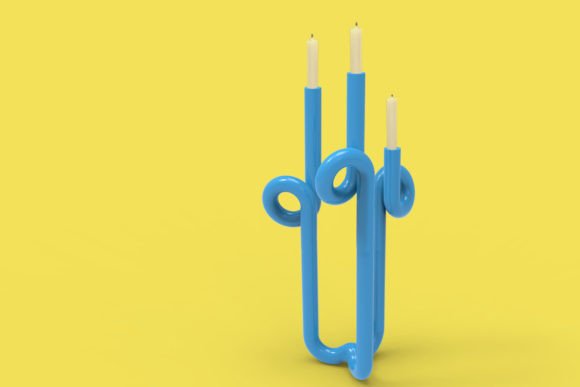
Elevating Digital Fabrication: The Strategic Value of the Scroll Candelabrum 3D Printing Candle Holder
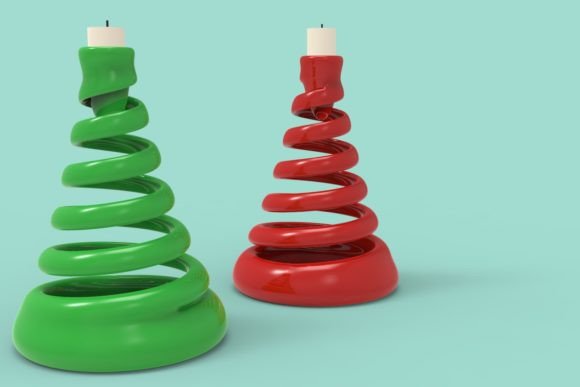
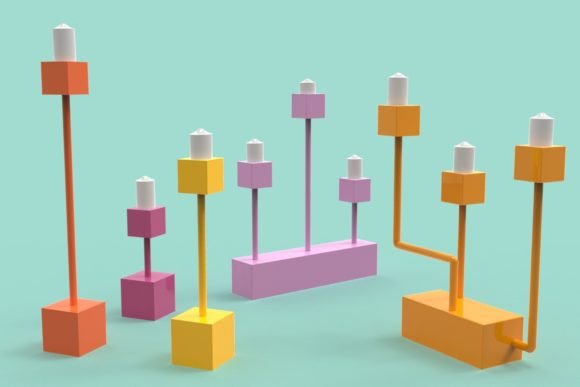
The intersection of traditional aesthetics and modern additive manufacturing represents one of the most significant shifts in contemporary product design and home decor. For professionals, creators, and entrepreneurs operating within the maker economy, the Scroll Candelabrum 3D Printing Candle Holder is more than a decorative object; it is a case study in efficient digital asset creation and sustainable fabrication. As the market for bespoke home goods matures, the demand has shifted from novelty prints to functional, aesthetically refined objects that respect both material costs and production time. This specific model exemplifies how technical precision meets artistic intent, serving as a benchmark for what high-quality 3D printable assets should offer in a professional workflow.
Redefining Efficiency in Additive Manufacturing
In the current landscape of 3D printing, material efficiency is no longer just an environmental consideration; it is a critical business metric. Whether you are a freelancer fulfilling custom orders or a hobbyist managing a personal budget, filament consumption directly correlates to profitability and project viability. The Scroll Candelabrum 3D Printing Candle Ho addresses this economic reality through intelligent geometric design. Unlike generic models that rely on solid infill to achieve structural integrity, this model is engineered with a deliberate hollow internal structure.
This design choice is significant for several reasons. First, it drastically reduces print time, allowing for higher throughput in production environments. Second, it minimizes material waste without compromising the visual weight or tactile quality of the finished piece. For marketers and sellers in the Etsy or Shopify ecosystems, this efficiency translates to better margins and faster turnaround times. The model demonstrates that optimization does not require sacrificing beauty; rather, true craftsmanship in the digital age involves designing specifically for the constraints and advantages of the FDM (Fused Deposition Modeling) process.
Technical Specifications as Quality Indicators
Professional-grade 3D printing assets are distinguished by their adherence to manufacturing tolerances. A common frustration in the digital fabrication community is downloading files that require extensive remediation before they can be sliced successfully. The Scroll Candelabrum 3D Printing Candle Holder mitigates this risk through precise specification. The wall thickness is maintained between 2-3 mm, a crucial parameter that ensures the object possesses sufficient rigidity while remaining lightweight. This range is the sweet spot for most standard 0.4mm nozzles, ensuring that walls are printed with adequate perimeters to prevent delamination or fragility.
Furthermore, the functional aspect of the candelabrum has been calibrated for real-world utility. The widest candle holes feature a diameter of 10 mm, accommodating standard taper candles while accounting for the slight dimensional inaccuracies inherent in fused filament fabrication. This attention to tolerance prevents the post-processing headaches often associated with 3D printed functional parts. When a designer provides preview dimensions in millimeters and adheres to them strictly, it signals a level of professionalism that builds trust with the end-user. For creators integrating this model into a larger collection or product line, such reliability streamlines the entire production pipeline.
The Convergence of Heritage Design and Modern Technology
Beyond the technical specifications, the Scroll Candelabrum 3D Printing Candle Ho taps into a broader cultural trend: the resurgence of classical ornamentation reinterpreted through digital tools. We are witnessing a move away from the sterile minimalism that dominated early 3D printing toward designs that carry historical weight and emotional resonance. Scrollwork, traditionally the domain of skilled metalworkers and woodcarvers, is now accessible through layer-by-layer deposition. This democratization of ornate design allows independent creators to offer luxury-adjacent aesthetics at accessible price points.
For interior designers and home stagers, this capability is transformative. It allows for the rapid prototyping of period-appropriate decor that can be customized in scale or color to fit specific spatial requirements. The scroll motif itself bridges the gap between vintage charm and modern manufacturing, making it versatile enough for eclectic, bohemian, or neo-classical interiors. By choosing a model like this, professionals are not just printing a candle holder; they are participating in a movement that validates 3D printing as a legitimate medium for serious decorative arts.
Workflow Integration and File Versatility
The practical utility of a digital asset extends beyond its geometry to its compatibility with existing workflows. The archive for this project includes both OBJ and STL files, acknowledging the diverse software ecosystems used by today’s professionals. While STL remains the industry standard for slicing, OBJ files preserve mesh data in a format that is often preferred for further editing, scaling, or integration into larger digital scenes for rendering and visualization.
This dual-format delivery is essential for freelancers and agencies who may need to showcase the product in a virtual environment before committing to physical production. It also supports a modular approach to design, where the Scroll Candelabrum 3D Printing Candle Holder might be combined with other assets to create unique composite pieces. In an industry where adaptability is key, providing flexible file formats reduces friction and enhances the long-term value of the purchase. It respects the user's agency, allowing them to modify, repair, or remix the design within the bounds of licensing, fostering a more collaborative and innovative creative environment.
Meeting Evolving Consumer Expectations
The modern consumer of 3D printed goods is increasingly sophisticated. They are less impressed by mere novelty and more focused on finish quality, functionality, and sustainability. The Scroll Candelabrum 3D Printing Candle Ho aligns with these evolving preferences by prioritizing a clean, purposeful design over excessive complexity. The hollow construction not only saves material but also reduces the thermal mass of the object, which can be beneficial when holding lit candles, as it allows for better heat dissipation compared to a dense, solid block of plastic.
Moreover, the ability to produce such items on-demand supports the growing preference for localized, low-inventory retail models. Entrepreneurs can list this item without holding physical stock, printing only when an order is secured. This reduces overhead and eliminates the risk of unsold inventory. The aesthetic appeal of the scroll design ensures it stands out in crowded marketplaces, while the technical soundness ensures positive reviews and repeat business. In this way, the model serves as a foundational element for a sustainable micro-manufacturing business.
The Role of Precision in Creative Freedom
Creative freedom in 3D printing is often constrained by the limitations of the machine. Designs that look spectacular in CAD software frequently fail on the build plate due to unsupported overhangs or thin features. The Scroll Candelabrum 3D Printing Candle Holder represents a mature understanding of these limitations. It is "carefully prepared for 3D printing," a phrase that carries significant weight for experienced makers. It implies that the orientation, support requirements, and layer adhesion have been considered during the modeling phase, not as an afterthought.
This foresight allows users to focus on finishing techniques—sanding, priming, painting, or texturing—rather than troubleshooting print failures. For professionals selling finished goods, this reliability is paramount. It transforms 3D printing from a temperamental prototyping tool into a consistent production method. The scroll candelabrum thus becomes a canvas for artistic expression, where the base form is guaranteed to be sound, freeing the creator to add unique value through post-processing and customization.
Future-Proofing Digital Asset Libraries
As the 3D printing industry continues to evolve, the value of well-documented, technically sound assets will only increase. We are moving toward an era of parametric customization and automated manufacturing, where the quality of the source file dictates the success of the output. Investing in models like the Scroll Candelabrum 3D Printing Candle Ho is an investment in a library of proven geometries that can serve as references, bases for modification, or standalone products for years to come.
The emphasis on standard measurements (mm), clear wall thickness parameters, and functional tolerances sets a precedent for what users should expect from digital marketplaces. It raises the bar for the entire ecosystem, encouraging designers to prioritize manufacturability alongside aesthetics. For the professional user, curating a collection of such high-integrity assets is a strategic advantage. It reduces development time for new projects, ensures consistent quality across product lines, and maintains alignment with best practices in additive manufacturing.
Ultimately, this scroll candelabrum is a testament to the maturity of desktop fabrication. It proves that we have moved past the experimental phase and into an era of refined, intentional production. Whether utilized for personal enrichment, commercial enterprise, or artistic exploration, it embodies the principles of efficiency, beauty, and technical excellence that define the next generation of 3D printing. By embracing such thoughtfully engineered designs, creators and entrepreneurs position themselves at the forefront of a rapidly advancing field, ready to meet the demands of a discerning and dynamic market.