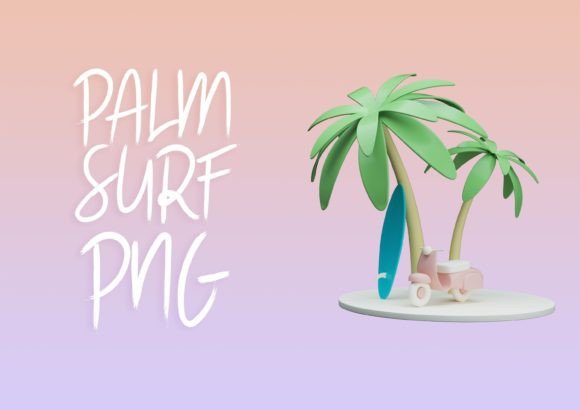
Enhancing Digital Design with High-Resolution 3D Cartoon Assets: A Guide to Palm Tree, Surf, and Scooter Compositions
In the rapidly evolving landscape of digital design, the visual language we use to communicate ideas is just as important as the text itself. Whether you are building a travel website, creating educational materials for children, or designing merchandise for a summer brand, the quality and style of your imagery dictate how your audience perceives your message. One specific aesthetic that has gained tremendous traction in recent years is the 3D rendered cartoon illustration. Specifically, compositions featuring iconic leisure elements like palm trees, surfboards, and scooters have become staples for projects requiring a blend of nostalgia, fun, and modern polish.
Understanding the technical and creative value of these assets is essential for designers, marketers, and content creators. When utilizing a high-quality asset described as a "Palm tree, Surf and scooter composition without background," it is crucial to understand not just what the image depicts, but why its specific technical specifications—such as 3000 x 3000 pixel dimensions and 300 DPI resolution—matter for both web and print applications. This guide explores the significance of these 3D cartoon assets, their practical applications across various industries, and how to leverage them effectively while avoiding common pitfalls.
The Rise of 3D Cartoon Illustrations in Modern Media
To appreciate the utility of a palm tree, surf, and scooter composition, one must first understand the shift toward 3D cartoon aesthetics in contemporary design. For decades, flat vector art dominated the web. While clean and scalable, flat design often lacked emotional depth and tactile appeal. The resurgence of 3D rendering in a cartoon style bridges this gap. It offers the cleanliness of vector art but adds lighting, texture, and volume that make images feel tangible and inviting.
This style is particularly effective for themes involving leisure, vacation, and youth culture. A 3D rendered palm tree catches light in a way that suggests warmth; a cartoon scooter implies motion and playfulness through exaggerated proportions and glossy materials. Unlike photorealistic stock photography, which can sometimes feel generic or overly serious, 3D cartoon illustrations create a unique brand identity that feels custom-crafted and approachable. They signal to the viewer that the content is friendly, accessible, and modern.
Why Composition Matters: The Visual Trinity of Leisure
The specific combination of a palm tree, a surfboard, and a scooter is not arbitrary. In visual semiotics, these three elements form a powerful narrative triad:
- The Palm Tree: Universally recognized as a symbol of relaxation, tropical climates, and escape from the mundane. In 3D rendering, it provides verticality and organic texture.
- The Surfboard: Represents ocean culture, balance, and adventure. Its sleek shape contrasts beautifully with the organic fronds of the palm tree, adding dynamic diagonal lines to the composition.
- The Scooter: Adds an element of urban mobility and youthful energy. It grounds the scene, suggesting that this paradise is accessible and active rather than static.
When combined in a single composition without a background, these elements create a versatile focal point. The absence of a background is a critical design feature. It transforms the image from a fixed scene into a modular asset that can be placed over any color, gradient, or photographic backdrop, allowing for seamless integration into diverse layout grids.
Technical Specifications: Understanding Resolution and Format
For general readers and beginner designers, terms like "300 DPI" and "3000 x 3000 pixels" might seem like mere technical jargon. However, these specifications are the difference between a professional result and an amateur mistake. When acquiring a PNG file of this nature, understanding these metrics ensures the asset performs correctly across different mediums.
The Importance of 3000 x 3000 Pixel Dimensions
A square format of 3000 x 3000 pixels provides a massive canvas. In the context of web design, this may seem excessive since most screens display at 72 or 96 PPI (pixels per inch). However, high-pixel-count originals are necessary for future-proofing. With the advent of Retina displays and 4K monitors, web assets need to be significantly larger than their display size to appear crisp. Starting with a 3000px source allows you to scale down for standard web use while retaining enough data for high-density screens.
Furthermore, this dimension supports responsive design. A large master file can be cropped, zoomed, or resized for mobile banners, social media posts, and desktop hero sections without losing integrity. If you were to start with a smaller image, say 800 x 800 pixels, scaling it up for a print brochure or a large monitor would result in pixelation and blurriness.
Decoding 300 DPI for Print Readiness
DPI (dots per inch) refers to print density. While screens use pixels, printers use dots of ink. A resolution of 300 DPI is the industry standard for high-quality commercial printing. This specification indicates that the file contains enough information to produce sharp, vibrant physical products.
This dual-purpose capability is where the true value lies. Many digital assets are restricted to screen use only. By securing a file optimized at 300 DPI, the same palm tree, surf, and scooter composition used on your landing page can also be utilized for:
- Merchandise: T-shirts, tote bags, and stickers require high-resolution source files to prevent jagged edges in the print.
- Marketing Collateral: Flyers, brochures, and business cards demand 300 DPI to look professional.
- Large Format Signage: While 3000 pixels may limit the maximum physical size at full 300 DPI, it is sufficient for many standard poster sizes and definitely adequate for smaller point-of-sale displays.
The Strategic Advantage of PNG Transparency
The specification explicitly mentions a PNG file without background. PNG (Portable Network Graphics) is superior to JPEG for this type of illustration because it supports alpha transparency. JPEGs compress images by discarding data and cannot handle transparent backgrounds, forcing designers to manually remove backgrounds—a process that often leaves unsightly halos or jagged edges around complex objects like palm fronds.
Receiving a pre-rendered transparent PNG saves hours of post-production work. It preserves the anti-aliasing (the smooth transition of pixels) along the edges of the 3D render, ensuring the object looks like it naturally belongs on whatever background you choose. This is particularly vital for maintaining the illusion of depth in cartoon-style 3D renders.
Practical Applications Across Industries
The versatility of a high-quality 3D cartoon composition extends far beyond simple decoration. Here is how different sectors leverage these assets to enhance communication and engagement.
Web Design and User Experience
In web design, whitespace is active space. A "composition without background" respects whitespace. Designers can place the palm tree and scooter cluster in the negative space of a hero section, wrapping text around the organic shapes rather than forcing content into rigid boxes. This breaks the monotony of grid-based layouts and guides the user’s eye naturally through the page. The playful 3D style also reduces cognitive load, making technical or commercial websites feel more welcoming.
Education and E-Learning
For educational platforms targeting younger audiences or language learners, realistic imagery can sometimes be distracting or culturally specific. 3D cartoon assets offer a stylized neutrality. A scooter and surfboard represent concepts of transport and recreation clearly without tying the lesson to a specific real-world location or demographic. The bright, saturated colors typical of this style help maintain attention and improve memory retention through visual association.
Branding and Social Media Content
Consistency is key in branding. Using a cohesive set of 3D illustrations helps establish a visual voice. Because these renders are generated digitally, they can be easily matched in lighting and color grading. A brand can use the palm tree composition for summer campaigns and swap in other assets from the same 3D collection for winter campaigns, maintaining stylistic continuity. On social media, these high-res PNGs serve as perfect overlays for Instagram Stories or TikTok thumbnails, providing instant professional polish to user-generated content.
Common Misunderstandings and Best Practices
Despite the ease of use, there are common misconceptions about working with high-resolution 3D assets that can lead to suboptimal results.
Misconception: Bigger is Always Better for Web
While having a 3000 x 3000 pixel master file is excellent, never upload the raw file directly to a website. A PNG of this size and complexity can be several megabytes, drastically slowing down page load times and hurting SEO. Always optimize web versions using tools like TinyPNG or WebP conversion, reserving the full-resolution master for print or archival purposes.
Misconception: Transparent Means Invisible on White
When editing these files, users sometimes assume the image is missing because they view it against a white canvas in their software. Always check layer visibility and use a checkerboard background setting in your design tool to verify transparency before exporting.
Best Practice: Respect the Lighting
3D renders have baked-in lighting. When placing a palm tree and scooter composition onto a new background, consider the light source. If your website background has a shadow falling to the left, but the 3D asset is lit from the left, the composite will look unnatural. Choose assets with neutral, top-down lighting for maximum versatility, or add subtle drop shadows in your design software to ground the floating elements.
Conclusion: Investing in Quality Visual Assets
The "Palm Tree, Surf and Scooter Composition" represents more than just a decorative graphic; it is a functional design tool. By combining the emotional resonance of cartoon aesthetics with the rigorous technical standards of 300 DPI and high-pixel dimensions, these assets bridge the divide between digital flexibility and print fidelity.
For creators, understanding the "why" behind the specs empowers better decision-making. It ensures that the investment in high-quality PNG files yields returns across multiple platforms, from responsive websites to tangible merchandise. As visual communication continues to prioritize engagement and personality, mastering the use of transparent, high-resolution 3D illustrations will remain a valuable skill in the modern creative toolkit. Whether you are a seasoned art director or a small business owner managing your own marketing, leveraging these assets correctly ensures your message is seen clearly, vibrantly, and professionally.