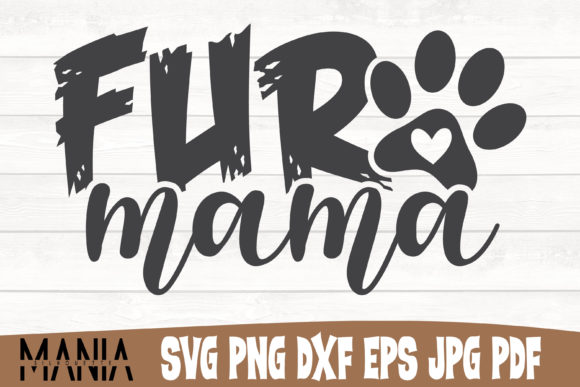
Fur Mama Svg Cut File Design: A Comprehensive Guide for Designers and Makers
Key Features of the File Pack
- Multiple File Formats: The pack includes SVG, PNG, EPS, JPEG, DXF, and PDF files, offering flexibility across different design and production tools.
- Layered and Organized Design: Each file is meticulously crafted with clearly defined layers, making it easy to edit and customize individual components.
- High-Quality Scalability: Vector-based formats like SVG and EPS allow for infinite scaling without loss of resolution, making them ideal for both small and large-scale printing.
- Compatibility: Works seamlessly with popular cutting machines and editing software including Cricut, Silhouette Studio, Adobe Creative Cloud, and more.
- Transparent Backgrounds: PNG files come with transparent backgrounds, enabling easy integration into layered designs and print-on-demand projects.
Applications Across Industries and Use Cases
Apparel and Merchandise: Whether you're screen printing t-shirts, creating iron-on transfers, or designing custom baby clothes, the JPEG and PNG files offer excellent print quality. The Fur Mama Svg Cut File Design is especially useful for small businesses and entrepreneurs in the custom apparel space.
Crafting and DIY Projects: Hobbyists using Cricut or Silhouette machines can easily import SVG or DXF files to create personalized home decor, greeting cards, or vinyl stickers. The precision of the layers ensures clean cuts and professional results.
Digital Art and Animation: For those working in Adobe Flash or After Effects, the EPS and SVG files can be imported and animated with ease. This opens up opportunities for digital artists and motion designers to incorporate high-quality vector graphics into their work.
3D Modeling and Engraving: The DXF format is compatible with most 3D modeling software, allowing for the creation of engraved designs on materials like wood, metal, or acrylic. This is particularly useful in industrial design and prototyping environments.
Why Professionals and Hobbyists Prefer Fur Mama Svg Cut File Design
For Educators: Teachers and instructors in design and technology fields can use these files to demonstrate vector editing, file conversion, and cross-platform compatibility in classroom settings.
For Entrepreneurs: Small business owners launching a print-on-demand service or custom product line can streamline their workflow by using a single file pack that works across multiple machines and software platforms.
For Digital Creators: Graphic designers, illustrators, and animators can integrate these files into their existing projects without worrying about compatibility or resolution loss, saving time and improving overall output quality.
Technical Considerations When Using the Files
- SVG Files: Ideal for web use and scalable graphics. Make sure your software supports SVG if you're importing into Adobe Illustrator or a cutting machine.
- PNG Files: Best for static images with transparency. Use these when you need a fixed-size image without the need for resizing.
- EPS Files: Preferred for high-quality print production. Use in Adobe Illustrator for detailed vector editing.
- JPEG Files: Suitable for heat transfer and screen printing. Note that JPEG is a raster format, so resizing beyond original dimensions may affect quality.
- DXF Files: Commonly used in CAD and 3D modeling. Ensure your 3D software supports DXF import for best results.
- PDF Files: Contains all clip art in one document, making it easy to access and extract individual elements for various projects.
Maximizing Value Through Workflow Integration
- Start with the PDF: Review the PDF file first to understand the layout and available clip art. This will help you identify which elements you want to use in your project.
- Select the Right Format: Choose the file type based on your intended use. For example, SVG or DXF for cutting machines, PNG for transparent overlays, and EPS for print-ready designs.
- Edit in Compatible Software: If you're using Adobe Illustrator, work with EPS or SVG files. For Silhouette Studio or Cricut, import SVG or DXF depending on your machine's capabilities.
- Test Before Production: Always test your design on a small scale before committing to large-scale printing or engraving. This helps catch any alignment or layering issues early.
- Organize Layers: Since the files are layered, take time to rename and organize layers in your editing software for easier navigation and future edits.
Real-World Examples and Practical Implementation
Case Study 1 – Custom Baby Apparel: A small online store uses the JPEG and SVG files to create personalized baby onesies. The SVG file is imported into Cricut Design Space to cut vinyl, while the JPEG is used for direct-to-garment printing. The combination of formats ensures both durability and clarity in the final product.
Case Study 2 – Educational Use: A high school technology teacher uses the DXF file in a CAD class to teach students about vector design and 3D engraving. The students import the file into a 3D modeling program and simulate engraving it onto a wooden plaque, gaining hands-on experience with real-world design files.
Case Study 3 – Digital Illustration: A freelance illustrator uses the EPS file in Adobe Illustrator to integrate the Fur Mama design into a larger vector illustration. The ability to scale and edit individual layers allows for seamless blending with other artwork elements.