Libya Flag Isolated on White Background: Maximizing Quality and Versatility in Digital Design
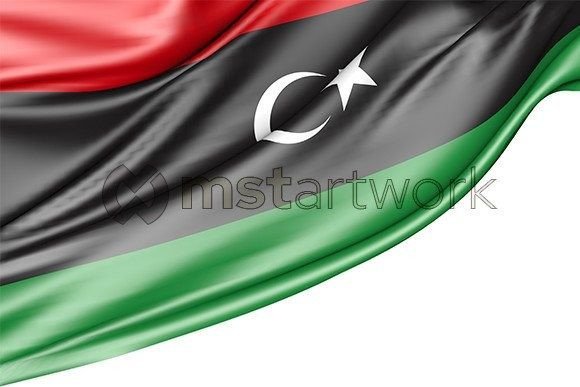
When sourcing national symbols for creative projects, precision and technical quality are non-negotiable. A high-quality Libya Flag isolated on white background serves as a foundational asset for designers, educators, and entrepreneurs who need accurate representation without the hassle of manual editing. This specific visual resource—a 3D illustration rendered at 3840×2160px resolution—offers more than just a patriotic symbol; it provides a ready-to-use element that maintains integrity across diverse mediums. Whether you are designing educational materials, creating merchandise for print-on-demand platforms, or enhancing a corporate presentation, understanding the nuances of this file type ensures your final output looks professional and respectful.
The interest in this specific asset stems from its versatility. Unlike photographs taken in variable lighting conditions, a 3D illustration isolated on white offers consistent color values and clean edges. This uniformity is critical when integrating the flag into complex layouts where lighting must match surrounding elements. However, having the right file is only half the battle. Many creators inadvertently compromise their projects by overlooking technical specifications or misapplying the asset. Avoiding these common pitfalls requires a practical understanding of resolution, color management, and file handling.
Common Pitfalls When Using Isolated Flag Assets
Even experienced designers can make errors when working with pre-rendered national flags. These mistakes often stem from assumptions about file usability rather than actual testing. Recognizing these issues early saves time, money, and potential embarrassment in public-facing projects.
Ignoring Resolution Requirements for Print vs. Web
A frequent error is assuming that a JPG file labeled as high-resolution is universally suitable for all applications. While 3840×2160px is excellent for 4K video overlays, web graphics, and standard office printing, it has limitations for large-format production. If you attempt to stretch this Libya Flag isolated on white background to fit a 5-foot banner or a full-bleed poster without checking DPI (dots per inch), the image will pixelate. The 3D rendering style makes pixelation particularly noticeable because the smooth gradients and simulated fabric textures break down into jagged blocks when upscaled improperly.
Better Approach: Always calculate the physical print size before committing to the asset. At 300 DPI, a 3840×2160px image prints clearly at approximately 12.8 x 7.2 inches. For t-shirts, mugs, and standard posters, this is ideal. For larger signage, use this file as a reference but seek a vector alternative or a higher-raster source. Never rely on AI upscaling for national flags, as these tools frequently hallucinate incorrect stripe proportions or distort the crescent and star geometry.
Mishandling the White Background Isolation
The term "isolated on white background" is often misunderstood as "transparent." It is not. This asset is a solid JPG with a white backdrop. A common mistake is placing this JPG directly onto colored or textured backgrounds in presentations or social media posts, resulting in an unsightly white box around the flag. This looks unprofessional and disrupts the visual flow of your design. Furthermore, attempting to remove the white background using basic magic wand tools often leaves jagged white halos or eats into the red and green stripes, degrading the 3D effect.
Better Approach: Treat the white background as a masking guide, not a transparency layer. Use professional software like Photoshop, GIMP, or Affinity Photo to create a precise selection. Because the background is pure white (#FFFFFF), use the "Color Range" or "Select Subject" function for cleaner edges than a standard magic wand. Feather the selection by 0.5 to 1 pixel to blend the flag naturally into your new background. If you require frequent transparency, convert the cleaned file to PNG immediately after your first successful extraction to preserve quality for future use.
Overlooking Color Accuracy and Symbolic Integrity
National flags carry deep cultural significance, and color accuracy is paramount. The Libyan flag consists of three horizontal bands (red, black, green) with a white crescent and star centered in the black band. In 3D illustrations, lighting effects can sometimes shift these colors, making the red appear orange or the green look teal. Additionally, some stock assets incorrectly render the star’s orientation or the crescent’s curvature. Using an inaccurate version in educational content, government presentations, or cultural events can be perceived as disrespectful or amateurish.
Better Approach: Before publishing or printing, cross-reference the asset against official government specifications or reputable vexillology databases. Verify that the black stripe is exactly double the height of the red and green stripes. Ensure the crescent opens toward the hoist (left side) and the star is properly centered within the black field. If the 3D shading obscures these details, adjust the levels or curves in your editing software to restore true color values. Accuracy builds trust with your audience.
Practical Applications and Optimization Strategies
Understanding the technical constraints allows you to leverage this Libya Flag isolated on white background effectively across various platforms. Here is how to optimize the asset for specific use cases while maintaining quality.
- Social Media and Web Graphics: The 3840×2160px resolution is overkill for most social platforms, which compress images aggressively. Downscale the image to 1080px wide for Instagram or 1200px for Facebook before uploading. This reduces file size, improves load times, and prevents platform compression algorithms from introducing artifacts. Sharpen the image slightly after downscaling to maintain the crispness of the 3D render.
- Print-on-Demand Merchandise: For t-shirts and apparel, the white background must be removed flawlessly. Dark garments require extra care; any residual white pixels will print as white ink. Test your cutout on a dark layer in your design software before uploading to POD services. Consider adding a subtle drop shadow beneath the flag to enhance the 3D effect and separate it from the garment color.
- Educational and Corporate Presentations: Consistency is key. If using multiple flags in a slide deck, ensure all share similar lighting direction and perspective. This 3D illustration likely has a top-left light source. Match other assets to this lighting to create a cohesive visual language. Embed the image at native resolution in PowerPoint or Keynote to prevent automatic compression that blurs text and fine details.
- Craft Projects and Stickers: For physical crafts, consider the substrate. Printing on glossy photo paper enhances the 3D illusion, while matte paper flattens it. If creating stickers, add a 2-3mm white border around the flag after background removal. This protects the colored edges from being trimmed off during cutting and improves visibility on dark surfaces.
Pre-Purchase and Pre-Use Checklist
To ensure this asset meets your specific needs, perform these checks before integrating it into your workflow:
- Verify Licensing Terms: Confirm whether the license covers commercial use, especially for print-on-demand products. Some licenses restrict resale of items where the flag is the primary value. Understand the difference between editorial and commercial rights.
- Inspect at 100% Zoom: Download a preview or watermarked version if available. Zoom to 100% to check for compression artifacts, color banding in gradients, or noise in the white background. Clean white space should be uniformly #FFFFFF, not grayish or speckled.
- Test Background Removal: If your project requires transparency, test the isolation process on a copy before starting your main design. Complex 3D shadows may require manual refinement beyond automated tools.
- Confirm Aspect Ratio Compatibility: At 16:9 (3840×2160), this flag includes significant white space above and below. Ensure your layout accommodates this ratio, or plan to crop carefully without violating flag proportion standards.
- Check Color Profile: Determine if the file is RGB or CMYK. Web and screen projects require RGB; professional printing often prefers CMYK. Converting between profiles can shift colors, so perform test prints if color accuracy is critical.
By approaching the Libya Flag isolated on white background with technical awareness and cultural respect, you transform a simple digital asset into a powerful, versatile tool. Attention to resolution limits, proper isolation techniques, and color verification ensures your presentations, products, and publications maintain the highest standards of quality and professionalism.